Can Both Knees Be Replaced at the Same Time? Understanding Bilateral Knee Replacement Surgery
For patients suffering from severe arthritis in both knees, daily movement can become increasingly challenging. When both knee joints are damaged, many patients wonder whether it is possible to replace both knees during a single operation rather than undergoing two separate procedures.
The answer is yes. Bilateral knee replacement surgery allows both knee joints to be replaced during a single operation. For suitable candidates, it can reduce the overall treatment timeline and allow recovery for both knees at the same time. The decision depends on overall health and the ability to safely undergo anaesthesia.
What Is Bilateral Knee Replacement Surgery?
Bilateral knee replacement surgery involves replacing both damaged knee joints during one operation. The procedure is generally considered when arthritis or joint damage affects both knees significantly and causes pain, stiffness, and reduced mobility.
Both joints are treated during the same hospitalization.
Patients who may be considered for bilateral knee replacement surgery include:
- Individuals with advanced arthritis in both knees
- Patients experiencing similar symptoms on both sides
- Those whose daily activities are limited by bilateral knee pain
- Patients who are medically fit for surgery
- Individuals seeking a single recovery and rehabilitation period
Why Do Patients Choose Bilateral Knee Replacement Surgery?
Patients with severe arthritis in both knees often choose bilateral knee replacement surgery to avoid two separate operations and recovery periods.
One Surgical Procedure
Instead of preparing for two separate operations, patients undergo one planned surgery.
One Recovery Period
Both knees recover during the same rehabilitation period.
Faster Overall Return to Activity
Treating both knees together may shorten the overall treatment journey compared to staged knee replacement procedures.
Is Bilateral Knee Replacement Surgery Safe?
Safety depends on selecting the right patient and conducting a thorough medical evaluation before surgery.
One of the most important considerations for bilateral knee replacement surgery is whether the patient can safely take anaesthesia. If the patient is medically fit, has stable heart and lung function, and is cleared by the anaesthesia team, replacing both knees during the same operation may be a suitable option.
The decision is based more on overall health than age alone. Many healthy individuals can safely undergo bilateral knee replacement surgery when properly evaluated.
Before recommending the procedure, surgeons typically assess:
- Ability to safely tolerate anaesthesia
- Heart and cardiovascular health
- Lung function
- Blood pressure control
- Diabetes management
- Body weight and fitness level
- Other medical conditions that may affect recovery
Patients with significant medical concerns may be advised to undergo staged knee replacement surgery instead.
How Long Does Bilateral Knee Replacement Surgery Take?
Surgical duration varies depending on the technique used and the patient's condition.
An experienced knee replacement surgeon like Dr Arumugam can perform:
- Conventional knee replacement in approximately 30 minutes per knee
- Robotic knee replacement in approximately 40 minutes per knee
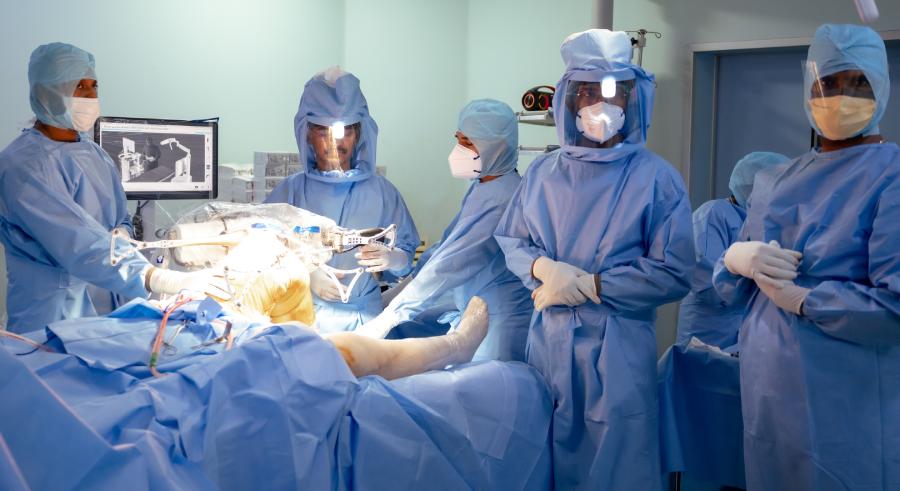
For suitable candidates undergoing bilateral knee replacement surgery, Dr. Arumugam and his experienced surgical team can complete both knee replacements in approximately 1 hour and 15 minutes while maintaining surgical precision and patient safety.
Who Is a Good Candidate for Bilateral Knee Replacement Surgery?
The ideal candidate is someone who is medically fit to safely undergo surgery and anaesthesia.
A patient may be considered suitable if they:
- Have severe arthritis in both knees
- Experience significant pain and stiffness on both sides
- Are medically fit for anaesthesia
- Have controlled medical conditions
- Are motivated to participate in rehabilitation
The final recommendation is made after a comprehensive orthopedic and medical evaluation.
Recovery After Bilateral Knee Replacement Surgery
Recovery focuses on restoring movement and strength through rehabilitation.
Early Recovery
Patients are encouraged to begin assisted movement soon after surgery.
Physiotherapy
Rehabilitation focuses on restoring knee function through:
- Range-of-motion exercises
- Muscle strengthening
- Walking training
- Balance exercises
- Functional mobility training
Returning to Daily Activities
Recovery timelines vary, but most patients notice gradual improvement in mobility and knee function over the following weeks.
Bilateral Knee Replacement Surgery vs Staged Knee Replacement
Both approaches have advantages, and the choice depends on individual circumstances.
Bilateral Knee Replacement Surgery
Benefits
- One surgery
- One hospital admission
- One anaesthesia event
- One rehabilitation period
- Shorter overall treatment timeline
Staged Knee Replacement
Benefits
- Shorter individual procedures
- Reduced surgical demand during each operation
The most suitable approach depends on the patient's health, surgeon's recommendation, and personal preferences.
What Results Can Patients Expect?
Modern knee replacement surgery aims to improve knee function and movement.
Patients often experience improvements in:
- Walking ability
- Knee stability
- Joint movement
- Standing tolerance
- Participation in routine activities
Outcomes depend on surgical accuracy and rehabilitation.
Frequently Asked Questions
Can both knees be replaced during the same operation?
Yes. Bilateral knee replacement surgery allows both knee joints to be replaced during a single surgical session in suitable patients.
Is bilateral knee replacement surgery more risky than replacing one knee?
Because two joints are treated during one procedure, careful patient selection is important. Patients who are medically fit and can safely tolerate anaesthesia may be suitable candidates.
How do doctors decide whether I can have bilateral knee replacement surgery?
The decision is based on overall health, heart and lung function, medical history, fitness level, and the ability to safely undergo anaesthesia.
How long does bilateral knee replacement surgery take?
The duration varies depending on the technique used. In suitable cases, Dr. Arumugam and his team can complete bilateral knee replacement surgery in approximately 1 hour and 15 minutes.
Will I need physiotherapy after surgery?
Yes. Physiotherapy plays an important role in restoring strength, movement, and function after bilateral knee replacement surgery.
Conclusion
For patients with severe arthritis affecting both knees, bilateral knee replacement surgery can be an effective solution that addresses both joints during a single operation. The procedure offers one hospitalization and one rehabilitation period, helping reduce the overall treatment timeline.
If a patient is medically fit and can safely tolerate anaesthesia, replacing both knees during the same operation may be a suitable option. With more than 27 years of orthopedic experience and over 8,000 joint replacement procedures, Dr. Arumugam and his team carefully evaluate every patient before recommending surgery.