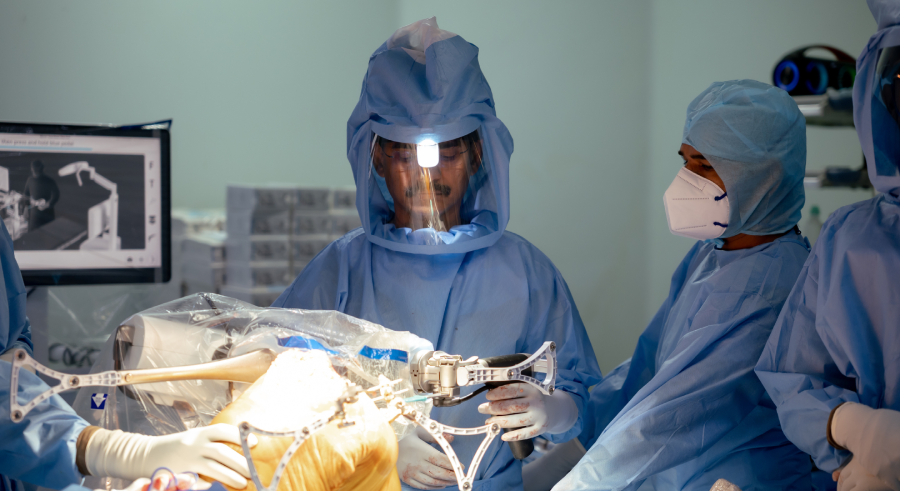
Can Robotic Knee Replacement Be Done Through Keyhole Surgery?

Many people believe that robotic knee replacement keyhole surgery means a much smaller incision because the procedure uses advanced technology. This is one of the most common misconceptions about robotic knee replacement surgery.
The answer is no. Robotic knee replacement is not a keyhole procedure. While robotic technology improves surgical planning and implant positioning, it does not change the size of the knee implant that needs to be placed inside the joint. The incision is generally similar to that of a conventional knee replacement because the surgeon still requires enough access to prepare the joint and accurately position the implant.
Understanding this difference helps patients make informed decisions based on facts rather than myths.
Is Robotic Knee Replacement a Keyhole Surgery?
The term "keyhole surgery" usually refers to procedures performed through very small incisions using a camera and specialized instruments. Knee replacement is different.
During robotic knee replacement surgery, damaged joint surfaces are replaced with artificial implants. These implants must be accurately positioned on the prepared ends of the bones. Because of their size and the precision required, keyhole knee replacement surgery is not possible with current implant designs.
The robot assists the surgeon with planning and guidance, but it does not reduce the surgical access needed to perform the operation safely.
Why Isn't the Incision Smaller in Robotic Knee Replacement?
Patients often ask, "Why isn't the incision smaller in robotic knee replacement?"
The incision is determined by what the surgeon needs to safely perform the procedure, including:
- Preparing the bone surfaces
- Positioning the knee implant accurately
- Checking ligament balance
- Protecting surrounding soft tissues
Even with robotic assistance, the implant still needs to pass through the surgical opening. Since it cannot fit through a tiny keyhole incision, the robotic knee replacement incision size remains similar to that of a traditional knee replacement.
The priority is not the smallest incision, it is accurate implant placement and patient safety.
What Does the Robot Actually Do?
The robot does not perform the surgery on its own. It is an advanced tool that assists the orthopedic surgeon throughout the procedure.
During robotic-assisted surgery, the system helps by:
- Creating a personalized surgical plan
- Providing real-time guidance
- Supporting precise bone preparation
- Assisting with accurate implant placement
These features improve surgical precision but do not change the physical size of the implant or eliminate the need for proper surgical exposure.
Robotic vs Traditional Knee Replacement
When comparing robotic vs traditional knee replacement, the biggest difference is not the incision size but the level of surgical precision.
Robotic technology allows surgeons to plan the procedure according to each patient's anatomy and receive real-time guidance during implant placement. Conventional knee replacement relies on standard instruments and alignment techniques. In both methods, however, the implant still requires a similar surgical incision for safe placement.
Is Minimally Invasive Robotic Knee Replacement Possible?
The phrase minimally invasive robotic knee replacement can be confusing. In knee replacement surgery, "minimally invasive" does not necessarily mean a tiny incision. Instead, it refers to techniques that minimize unnecessary disruption to muscles and soft tissues while maintaining safe access to the joint.
The goal is to perform the surgery accurately without compromising implant positioning or long-term function.
Frequently Asked Questions
Can robotic knee replacement be done through keyhole surgery?
No. The knee implant requires adequate surgical access, making keyhole surgery impossible for knee replacement.
Is robotic knee replacement a keyhole surgery?
No. The robot assists with planning and precision, but the procedure is not performed through a keyhole incision.
Does robotic knee replacement have a smaller incision?
Not usually. The incision is generally similar to that of conventional knee replacement because the implant size remains the same.
Why isn't the incision smaller in robotic knee replacement?
The surgeon needs enough access to prepare the joint and accurately position the implant while ensuring the procedure is performed safely.
Is minimally invasive robotic knee replacement different from keyhole surgery?
Yes. Minimally invasive techniques focus on reducing tissue disruption, whereas keyhole surgery refers to very small incisions that are not suitable for knee replacement.
Conclusion
The idea that robotic knee replacement keyhole surgery is possible is a common myth. Although robotic technology has improved the precision of knee replacement surgery, it has not changed the basic surgical requirements. The knee implant still needs adequate access for accurate placement, so the incision is generally similar to that of a conventional procedure.
The real advantage of robotic-assisted surgery lies in personalized planning, precise implant positioning, and greater surgical accuracy—not in making the incision smaller. Dr. S. Arumugam and his team use advanced robotic technology together with extensive surgical experience to provide patient-specific knee replacement surgery, focusing on precision, safety, and long-term joint function.