Dr. S. Arumugam Discusses Revision Knee Replacement at Mangalore Joint Conclave 2026
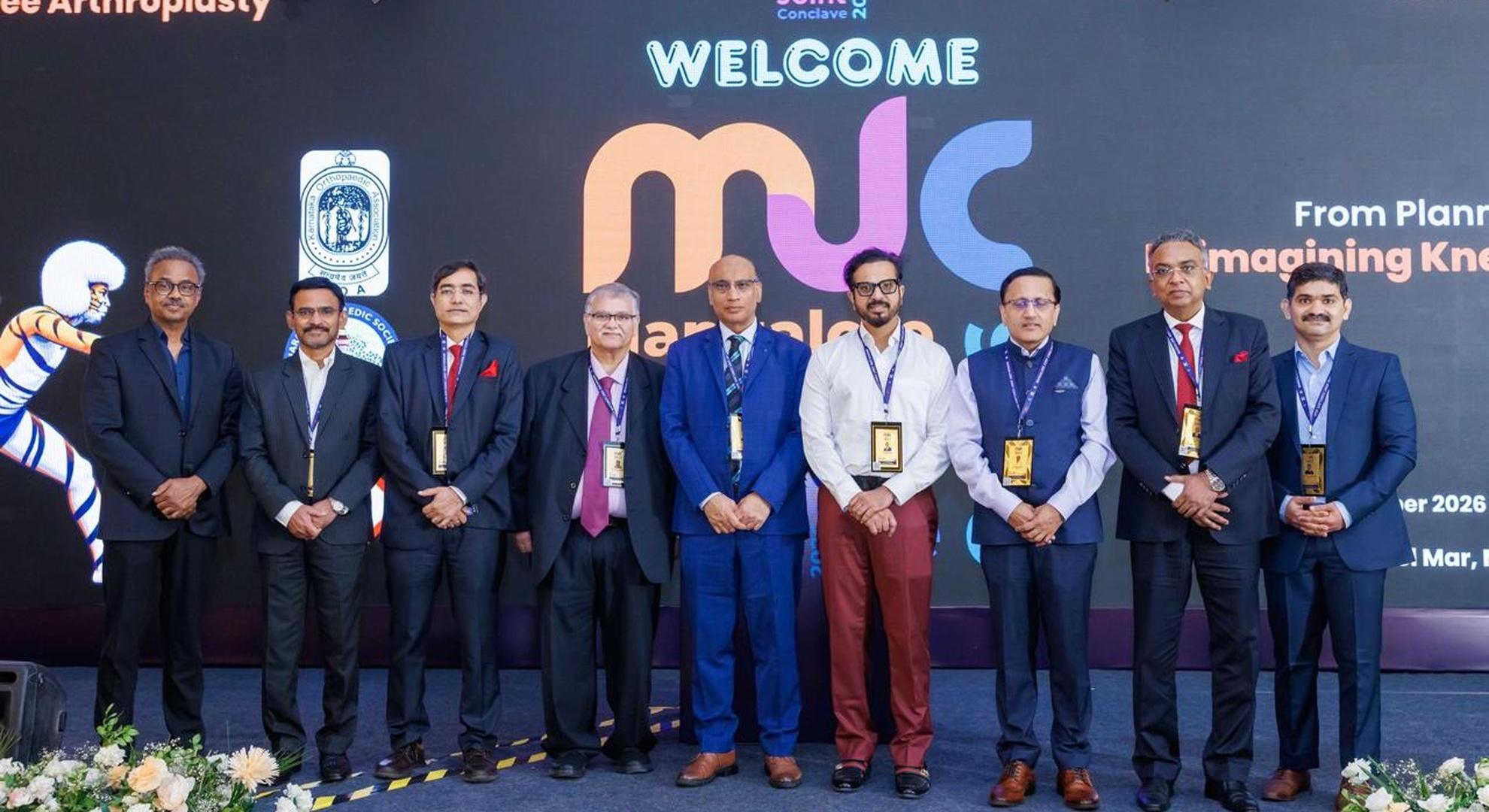
Advancements in knee replacement surgery depend on surgical experience, precise techniques and the continuous exchange of medical knowledge. Bringing these elements together, Dr. S. Arumugam, a senior orthopedic surgeon from Chennai, participated in the inaugural Mangalore Joint Conclave (MJC 2026), held in Mangalore, Karnataka.
The conference brought together orthopedic and joint replacement surgeons from across India to discuss developments in joint reconstruction. Dr. S. Arumugam contributed to the scientific programme with a specialised presentation on safe implant removal during revision knee replacement, highlighting the importance of bone preservation and careful surgical planning.
Mangalore Joint Conclave 2026: Advancing orthopedic Knowledge
The inaugural Mangalore Joint Conclave 2026 provided a platform for surgeons to exchange clinical experiences, discuss complex cases and examine evolving techniques in joint replacement surgery.
The scientific sessions covered important areas of knee reconstruction, including:
- Primary and revision knee replacement procedures
- Management of bone loss during revision surgery
- Implant selection and component positioning
- Robotic assistance and navigation in joint replacement
- Surgical techniques for complex knee conditions
Discussions between experienced surgeons created opportunities to share practical approaches to challenging procedures.
Dr. S. Arumugam participated alongside fellow specialists, contributing his clinical experience and insights into complex knee reconstruction.
Dr. S. Arumugam's Scientific Session on Safe Component Removal
One of the important sessions at MJC 2026 was Dr. S. Arumugam's presentation titled "Getting It Out: Safe Component Removal", which focused on a critical stage of revision knee replacement surgery.
In primary knee replacement surgery, damaged parts of the knee joint are replaced with artificial implants to restore movement and improve joint function. While these implants are designed to last for many years, some patients may need further surgery if the components loosen, wear down, become infected or develop other complications.
Revision knee replacement involves removing or exchanging one or more existing implant components and addressing the underlying problem.
Removing an existing implant requires considerable care because the surrounding bone and soft tissues must be protected.
His presentation emphasised three important principles:
- Bone preservation: Protecting healthy bone during implant removal to support subsequent reconstruction.
- Specialised instrumentation: Using appropriate surgical instruments to separate existing components while limiting unnecessary damage.
- Surgical precision: Carefully managing the removal process to reduce complications and prepare the joint for reconstruction.
These principles are particularly important when dealing with firmly fixed implants or patients who have already undergone multiple knee procedures.
Why Bone Preservation Matters in Revision Knee Replacement
Bone preservation is an essential consideration during revision knee replacement because the surgeon must work with the remaining bone to support the new implant.
When an existing implant is removed, some surrounding bone may be damaged or lost. Excessive bone loss can make reconstruction more challenging and may require specialised implants or additional surgical techniques.
Preserving bone wherever possible can help surgeons:
- Maintain adequate support for the replacement implant.
- Reduce avoidable bone damage during component removal.
- Improve the options available for joint reconstruction.
- Support appropriate implant positioning and stability.
The amount of bone available, the condition of surrounding tissues and the reason for implant failure influence the surgical approach.
Dr. S. Arumugam's presentation highlighted why careful component removal deserves particular attention during complex revision procedures.
Connecting Surgical Precision With Robotic Knee Replacement
Modern orthopedic surgery increasingly combines established surgical principles with technological developments.
Robotic knee replacement surgery uses digital guidance and real-time information to assist surgeons with implant planning, positioning and joint balancing in suitable cases.
Dr. S. Arumugam has extensive experience in this field, having completed more than 1,000 robotic knee replacement surgeries, alongside over 27 years of orthopedic practice.
While robotic assistance can support precision in selected knee replacement procedures, revision surgery presents different technical challenges. Existing implants, bone loss and changes in joint anatomy can affect the surgical plan.
The central principle remains the same: protecting healthy tissue while achieving appropriate joint stability and alignment.
His involvement in scientific discussions reflects the importance of combining clinical judgement, surgical experience and evolving technology in orthopedic care.
A Platform for Learning and Professional Collaboration
Beyond the scientific presentations, Mangalore Joint Conclave 2026 encouraged interaction among orthopedic specialists working across different areas of joint reconstruction.
Panel discussions, faculty interactions and professional exchanges gave participating surgeons opportunities to explore surgical techniques and share experiences from clinical practice.
Dr. S. Arumugam also appreciated the warm hospitality and cultural programmes organised during the event, which added to the experience of attending the inaugural conclave.
Such academic gatherings support continued medical education and encourage the exchange of practical knowledge between specialists.
Frequently Asked Questions About Revision Knee Replacement
1. What is revision knee replacement?
Revision knee replacement is a surgical procedure performed to replace or modify one or more components of an existing knee implant. It may be required when the implant becomes loose, worn, infected or unstable.
2. Why is implant removal important during revision knee surgery?
Careful implant removal helps protect the surrounding bone and tissues. Preserving healthy bone is important for supporting the new implant and planning successful joint reconstruction.
3. Is revision knee replacement more complex than primary knee replacement?
Revision procedures are often more complex because surgeons must address existing implants, possible bone loss, scar tissue and changes in joint stability. The difficulty varies according to each patient's condition.
4. Can robotic technology be used in revision knee replacement?
Robotic assistance may be considered in selected revision procedures, depending on the available technology and the patient's anatomy. However, not every revision case is suitable for robotic assistance.
Conclusion
The inaugural Mangalore Joint Conclave 2026 brought together orthopedic specialists to discuss developments and challenges in joint replacement surgery.
Through his presentation on safe component removal in revision knee replacement, Dr. S. Arumugam highlighted the importance of bone preservation, appropriate instrumentation and surgical precision when managing complex knee procedures.
With over 27 years of orthopedic experience and more than 1,000 robotic knee replacement surgeries, he continues to contribute to professional discussions focused on improving surgical techniques and patient care.
Patients seeking advice about knee replacement complications or revision surgery can consult Dr. S. Arumugam and the Chennai Ortho team for an individual assessment and treatment guidance.