What Happens During a Robotic Knee Replacement Surgery? How Is Robotic Knee Replacement Done?

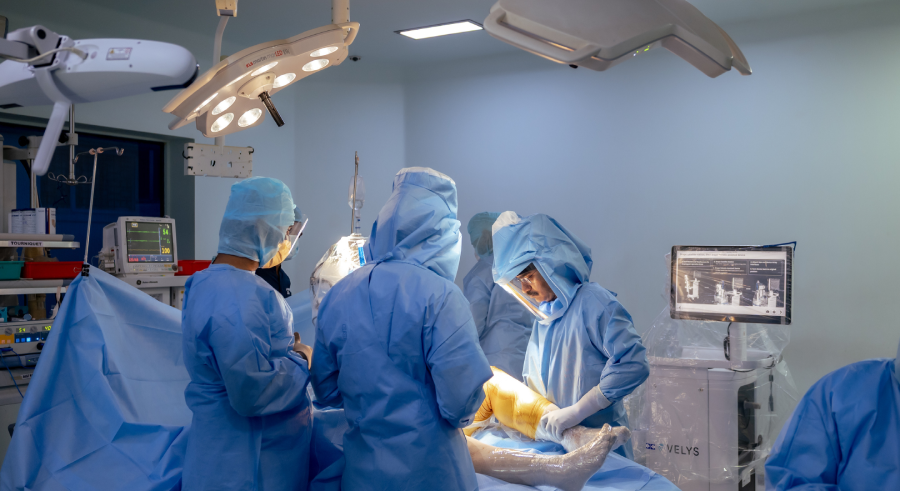
Robotic knee replacement is an advanced form of knee replacement surgery where the surgeon uses robotic-assisted technology to plan and perform specific steps with greater precision. For patients wondering how robotic knee replacement is done, the key point is that the robot does not perform the surgery independently. The orthopedic surgeon remains in control throughout the procedure. The system provides real-time information about the knee, helping the surgeon plan bone preparation, implant positioning, alignment, and joint balance according to the patient’s individual anatomy.
What Is Robotic Knee Replacement?
Robotic knee replacement follows the basic principles of conventional knee replacement. Damaged joint surfaces are removed and replaced with artificial components. The difference is that robotic technology assists the surgeon with planning, measurements, and precise execution.
Sensors track the position and movement of the knee during surgery. This information helps create a personalised surgical plan and allows the surgeon to make adjustments based on the patient’s anatomy.
How Is Robotic Knee Replacement Done Step by Step?
The exact process may vary depending on the robotic system and the patient’s condition. However, the procedure generally involves the following stages.
1. Anaesthesia and Surgical Preparation
The patient receives suitable anaesthesia before surgery. The knee is cleaned and prepared under sterile operating-room conditions. The surgeon then makes an incision to access the knee joint and examine the damaged areas.
2. Mapping the Knee
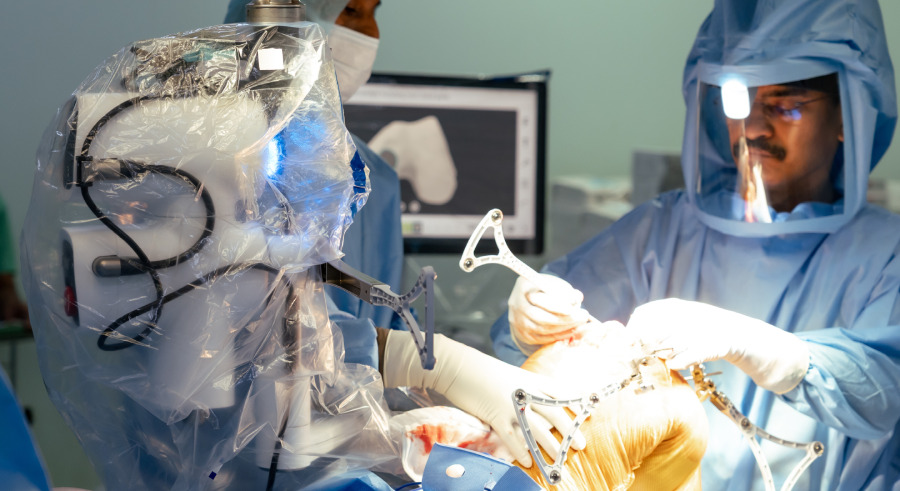
An important step in understanding how robotic knee replacement is done is knowing how the system maps the knee. Tracking sensors are positioned so the robotic system can identify the location and movement of the bones. The surgeon collects anatomical information from specific points around the joint. This creates a detailed representation of the patient’s knee for surgical planning.
3. Creating a Personalised Surgical Plan
Using the collected information, the surgeon develops a plan based on the patient’s anatomy.
The system can help assess:
- Bone structure and joint damage
- Knee alignment
- Implant size and position
- Ligament balance
- Joint movement
- Amount of bone requiring preparation
The surgeon reviews these measurements and can adjust the plan during the procedure if necessary.
4. Checking Alignment and Joint Balance
Successful knee replacement involves more than replacing damaged surfaces. The knee also needs appropriate alignment and soft-tissue balance.
The surgeon moves and assesses the knee while the robotic system provides real-time measurements. Small adjustments, sometimes involving only one or two degrees, can influence implant positioning and joint balance.
5. Robotic-Assisted Bone Preparation
This is a key stage when explaining how robotic knee replacement is done.
Depending on the robotic platform, a robotic arm may guide a specialised saw attachment. The surgeon controls the instrument while the robotic system helps keep bone preparation within the boundaries established in the surgical plan.
Sensors continuously track the knee and instruments. This allows controlled bone preparation while helping protect areas outside the planned surgical boundaries.
6. Trial and Final Implant Placement
After preparing the bone, trial components may be placed. The surgeon checks the knee’s alignment, stability, range of motion, implant position, and ligament balance.
If the measurements are satisfactory, the final knee implants are positioned. The surgeon then reassesses the knee before completing the procedure.
7. Closing the Incision
Once the implants are in place and the final checks are completed, the surgical area is cleaned and the incision is closed. A sterile dressing is applied, and the patient is transferred to the recovery area for monitoring.
How Does Robotic Technology Improve Precision?
Robotic-assisted systems use sensors to continuously monitor the position of the knee and surgical instruments. This gives the surgeon detailed information during important stages of the procedure.
At Chennai Ortho, sterility is also carefully maintained while using robotic technology. If interaction with a non-sterile screen is required, a trained assistant can operate it while the surgeon remains within the sterile surgical field.
The technology may allow very fine measurements, including sub-millimetre adjustments. However, robotic technology is a surgical tool. The surgeon still interprets the information and makes all important clinical decisions.
Does the Robot Perform the Surgery?
No. A common misconception about how robotic knee replacement is done is that a robot performs the operation automatically.
The surgeon remains in control. Robotic technology assists with planning, tracking, measurements, and precise execution of selected surgical steps. It does not replace the surgeon’s experience or clinical judgement.
Frequently Asked Questions
Is robotic knee replacement fully automated?
No. The surgeon performs and controls the procedure while the robotic system provides assistance.
Does robotic knee replacement require a CT scan?
Not always. Some robotic platforms can create the required anatomical information during surgery without a pre-operative CT scan.
What are the potential benefits of robotic assistance?
Potential advantages include precise bone preparation, patient-specific planning, real-time tracking, accurate implant positioning, and detailed assessment of knee alignment and balance.
Is recovery faster after robotic knee replacement?
Recovery varies between patients. Surgical technique, overall health, muscle strength, rehabilitation, and adherence to post-operative instructions can all affect recovery.
Who may be suitable for robotic knee replacement?
Patients with significant knee joint damage may be considered after an orthopedic evaluation. The decision depends on symptoms, joint condition, general health, and response to non-surgical treatments.
Conclusion
Understanding how robotic knee replacement is done helps patients see that the procedure combines advanced technology with surgeon-led decision-making. Robotic assistance can help with knee mapping, surgical planning, precise bone preparation, alignment assessment, and implant positioning, while the surgeon remains in control throughout the operation.
Dr. S. Arumugam, who has successfully performed 1,000+ robotic knee replacement surgeries, and his team combine robotic-assisted technology with extensive orthopaedic expertise to plan knee replacement procedures according to each patient’s anatomy and clinical needs.