What Type of Knee Implant Is Used in Knee Replacement Surgery?

Knee replacement does not involve putting a single artificial “knee” into the body. Instead, the damaged joint surfaces are resurfaced using several carefully matched components. The types of knee replacement implants available differ in their design, method of fixation and the way they provide stability during movement. The surgeon selects an implant system after considering the condition of the knee, ligament function, bone quality, deformity and individual anatomy.
Understanding these differences can help patients have a more useful discussion with their orthopedic surgeon before surgery.
What Is a Knee Replacement Implant Made Of?
A total knee replacement generally includes a femoral component covering the end of the thigh bone, a tibial component placed on the upper shin bone and a polyethylene insert positioned between them. This insert provides a smooth bearing surface between the metal components. In some patients, the back of the kneecap is also resurfaced with a polyethylene component.
Common materials include cobalt-chromium alloys, titanium alloys and medical-grade polyethylene. Different components may use different materials because each part has a different mechanical role.
Main Types of Knee Replacement Implants
The types of knee replacement implants are often classified according to how they manage the knee's ligaments and movement.
Cruciate-Retaining Implants
In a cruciate-retaining design, the posterior cruciate ligament (PCL) is preserved when it remains healthy and provides adequate stability.
The PCL helps control the relationship between the thigh bone and shin bone as the knee bends. Keeping it may allow the surgeon to use the patient's existing ligament as part of the knee's stabilising system.
However, this design is not suitable for every knee. A severely damaged, tight or poorly functioning PCL may make another implant design more appropriate.
Posterior-Stabilised Implants
With a posterior-stabilised implant, the PCL is usually removed. Stability is instead provided through features built into the implant.
This design may be considered when the PCL cannot provide reliable function or when the surgeon needs greater control while balancing the knee.
Neither cruciate-retaining nor posterior-stabilised implants should automatically be considered superior. Implant selection depends on the individual knee and the surgeon's assessment.
Fixed-Bearing and Mobile-Bearing Designs
Another distinction concerns how the polyethylene insert interacts with the tibial component.
In a fixed-bearing implant, the polyethylene insert is secured to the tibial tray.
In a mobile-bearing or rotating-platform design, the insert is designed to permit some rotation relative to the tibial tray.
Although mobile-bearing designs were developed with theoretical advantages involving movement and wear, evidence has not established a universal clinical advantage over fixed-bearing implants.
Cemented and Cementless Knee Implants
The types of knee replacement implants can also differ according to how they attach to bone.
Cemented fixation uses bone cement to secure the implant components. It has a long history of use in knee replacement.
Cementless fixation uses specially designed implant surfaces intended to allow bone to grow onto or into the component. Suitability can depend on factors such as bone quality, implant design and the patient's clinical situation.
Some operations may also use a combination of fixation methods.
Partial Knee Replacement Implants
Not every patient requires the entire knee joint to be resurfaced.
When arthritis is limited to an appropriate part of the knee and the remaining structures meet specific clinical requirements, partial or unicompartmental knee replacement may be considered. Only the affected compartment is resurfaced rather than replacing all major joint surfaces.
A partial knee implant therefore differs from a total knee replacement implant in both its size and the amount of the joint it replaces.
How Does a Surgeon Choose an Implant?
Selecting between different types of knee replacement implants is not simply about choosing the newest design or a particular brand. The surgeon may consider:
- Pattern and severity of arthritis
- Condition of the knee ligaments
- Bone quality
- Degree of bow-leg or knock-knee deformity
- Knee stability and range of movement
- Patient anatomy
- Whether total or partial replacement is appropriate
- Surgical technique and the implant system suited to that technique
Modern implant systems also provide multiple component sizes so that the surgeon can select dimensions that closely fit the patient's anatomy.
Does Robotic Knee Replacement Use a Different Implant?
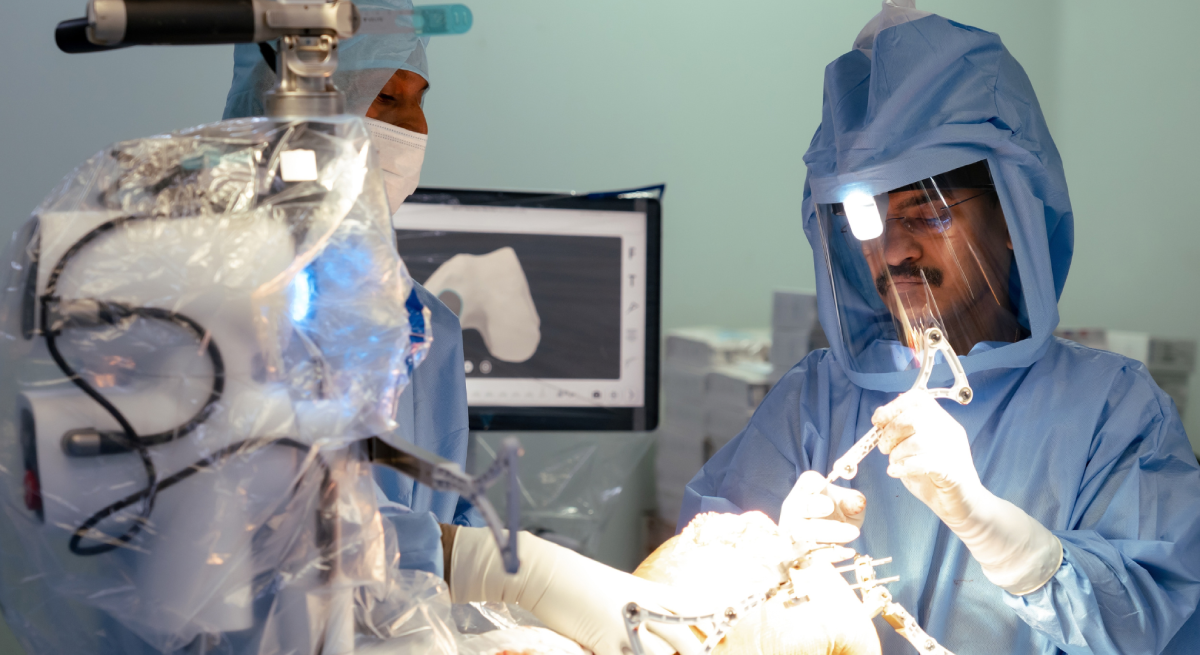
Robotic assistance does not mean that a robot replaces the knee or that a special robotic knee is implanted.
The implant is still positioned by the orthopedic surgeon. Robotic technology can assist with planning, bone preparation, assessment of alignment and evaluation of soft-tissue balance, depending on the robotic system being used.
Therefore, implant design and robotic assistance are two separate decisions. The technology helps the surgeon execute the surgical plan, while the implant becomes the permanent artificial joint.
Frequently Asked Questions
Which knee implant is the best?
There is no single implant design proven to be ideal for every patient. Large registry data have not established a clear universal advantage for one modern design over all others. Implant choice should be individualised.
Are knee implants made entirely of metal?
No. A typical total knee replacement combines metal components with a polyethylene insert that functions as the bearing surface between them.
Is the kneecap always replaced?
No. Patellar resurfacing is not performed in every knee replacement. The surgeon decides whether the undersurface of the kneecap should be resurfaced based on the knee and surgical approach.
Can the same implant be used for everyone?
No. Implant sizes and designs vary. Anatomy, ligament condition, bone quality, deformity and the extent of joint damage can influence implant selection.
How long can a knee implant last?
Implant longevity varies between individuals. Factors such as age, activity, body weight, implant fixation and complications can influence long-term survival. Modern knee replacements commonly function for many years, but no implant has a guaranteed lifespan.
Conclusion
The different types of knee replacement implants give surgeons options for managing variations in anatomy, ligament function, arthritis and bone quality. Cruciate-retaining, posterior-stabilised, fixed-bearing, mobile-bearing, cemented, cementless and partial knee systems each have specific applications.
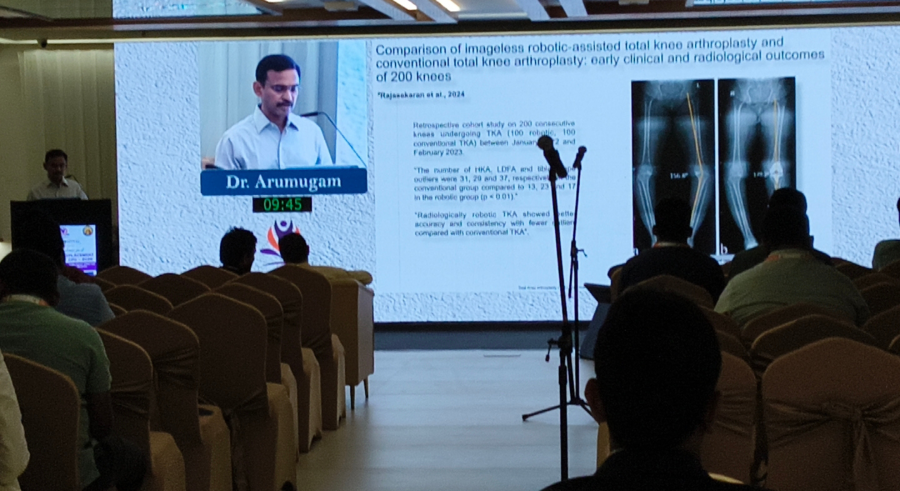
For patients considering knee replacement in Chennai, Dr. S. Arumugam and team assess the knee, its alignment, ligament balance and the extent of joint damage before planning surgery. Rather than selecting an implant based only on a brand or marketing claim, the aim is to choose an implant design and surgical plan suited to the individual patient's knee.