Dr. Arumugam Answers: Who Is a Candidate for Robotic Knee Surgery?

“Doctor, do I need knee replacement?” This is one of the most common questions patients ask Dr. S. Arumugam when they have advanced knee arthritis. The answer is not always yes, and robotic surgery is not recommended simply because a patient has knee pain.
Before considering knee replacement, Dr. Arumugam assesses the severity of arthritis, the extent of joint damage, the symptoms experienced by the patient, and how the knee condition affects daily activities. Depending on the condition, non-surgical treatment may be considered before surgery.
These options may include:
- Pain-relieving medicines when appropriate
- Physiotherapy and muscle-strengthening exercises
- Weight management when required
- Joint supplements or chondro-protective medicines in selected cases
- Intra-articular injections based on the individual patient and diagnosis
If these measures provide adequate relief, knee replacement may not be necessary at that stage.
So, Who Is a Candidate for Robotic Knee Surgery?
A candidate for robotic knee surgery is generally a patient who has significant knee joint damage and symptoms that continue despite appropriate non-surgical treatment. Dr. Arumugam makes this decision after a detailed clinical examination and evaluation of imaging.
Robotic-assisted knee replacement may be considered when:
- Arthritis has progressed significantly and affected the joint surfaces
- Knee pain and stiffness interfere with routine activities
- Symptoms continue despite appropriate conservative treatment
- There is substantial loss of joint function
- The condition is suitable for knee replacement based on examination and imaging
- The patient’s overall health allows surgery and rehabilitation
For many patients, advanced arthritis may correspond to Stage 4 osteoarthritis. However, the stage alone does not determine whether surgery is required. Symptoms, clinical examination, radiographs, joint damage, age, activity requirements, and previous treatment all need to be considered together.
Is Robotic Knee Surgery Suitable for Everyone?
No.
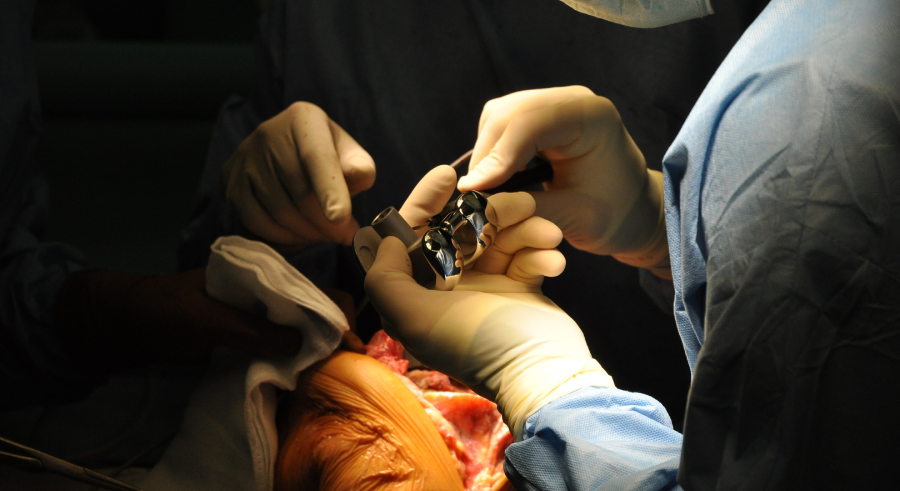
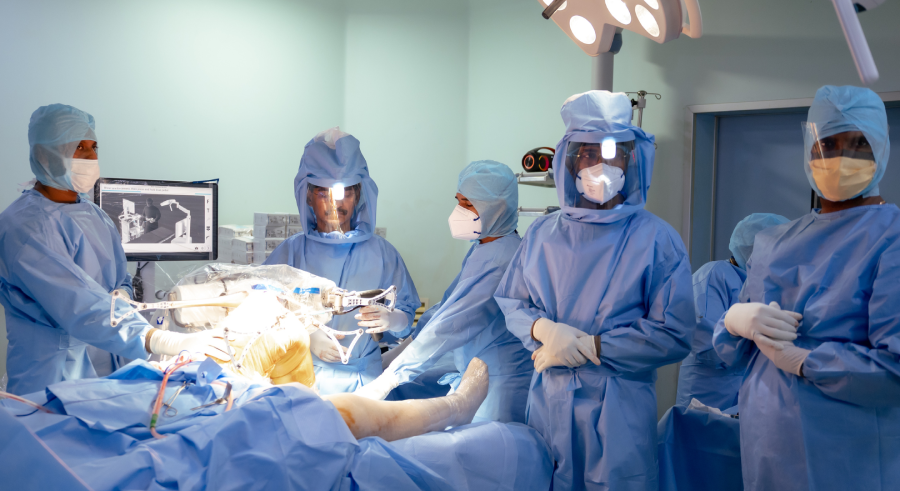
Robotic assistance is a surgical technology that helps the surgeon plan and perform knee replacement with greater control over bone preparation and implant positioning. It does not replace the surgeon’s clinical judgment.
The important question is not simply whether robotic surgery is available. The important question is whether knee replacement itself is appropriate and whether robotic assistance is suitable for the individual knee condition.
Dr. Arumugam bases the treatment decision on the patient's diagnosis and individual requirements. If knee replacement is appropriate, he selects the surgical approach and technology according to the condition of the knee.
With more than 27 years of experience in orthopedics, Dr. S. Arumugam has performed 8,000+ joint replacement procedures and 1,000+ robotic knee surgeries. His experience includes advanced joint replacement procedures and robotic-assisted knee surgery.
When Should Patients Discuss Robotic Knee Surgery?
Patients should consider a detailed orthopedic evaluation when knee arthritis is affecting daily activities despite appropriate non-surgical treatment, or when symptoms are becoming increasingly difficult to manage.
During the consultation, Dr. Arumugam can determine whether continued conservative treatment, another procedure, or knee replacement is appropriate. If knee replacement is recommended, he can then assess whether robotic assistance is suitable for the particular case.
Robotic knee surgery is therefore not a treatment that every patient with knee pain needs. It is an option for appropriately selected patients who require knee replacement and are suitable for a robotic-assisted approach.
What Does the Evaluation Involve?
When assessing whether robotic knee surgery is appropriate, Dr. Arumugam looks beyond the pain score alone. He evaluates knee movement, alignment, stability, muscle strength, previous treatments, medical history, and imaging findings.
X-rays help show the extent and location of arthritis and whether the joint damage corresponds with the patient's symptoms.
Robotic knee surgery can be particularly useful when accurate planning and controlled bone preparation are important for the planned knee replacement. The robotic system provides technology that supports surgical planning and execution, while Dr. Arumugam remains responsible for the major clinical and surgical decisions.
Frequently Asked Questions
1. Can robotic knee surgery be considered for partial knee replacement?
Yes, robotic assistance may be used for selected patients undergoing partial knee replacement. Suitability depends on the location and extent of arthritis, ligament condition, knee alignment, and other findings on clinical examination and imaging.
2. Do I need a CT scan before robotic knee surgery?
It depends on the robotic system being used. Dr. Arumugam uses the VELYS Robotic-Assisted Solution, which does not require a pre-operative CT scan for surgical planning.
3. Can patients with both knees affected by arthritis undergo robotic surgery?
Patients with arthritis affecting both knees may be evaluated for bilateral knee replacement. Whether both knees should be treated together or separately depends on the patient's overall health, knee condition, and surgical assessment.
4. How does Dr. Arumugam decide whether robotic assistance is appropriate?
Dr. Arumugam considers the patient's symptoms, clinical examination, knee alignment, joint damage, imaging findings, medical history, and surgical requirements. He then determines whether knee replacement is necessary and whether robotic assistance is appropriate for the planned procedure.
What Should Patients Remember?
If you have knee arthritis, do not assume that robotic knee surgery is automatically the next step. First, it is important to determine whether you actually require knee replacement. If replacement is indicated, Dr. Arumugam can assess whether robotic knee surgery is suitable for your joint condition.
The appropriate treatment depends on the individual patient. Sometimes, that means continuing non-surgical care. In other cases, advanced arthritis may make knee replacement appropriate. When replacement is required, robotic knee surgery may be considered as part of the surgical plan.
An evaluation by an experienced orthopedic surgeon can help you understand your diagnosis, available treatment options, and whether robotic knee surgery is appropriate for your condition.