Questions Every Patient Should Ask Their Surgeon Before Knee Replacement

Choosing knee replacement is a major healthcare decision. Before agreeing to surgery, patients naturally want to know: Do I really need it? Which procedure is right for me? What will recovery involve? And what can I realistically expect afterward?
Knowing the right questions to ask an orthopedic surgeon can make the consultation more useful. Instead of leaving with only a surgery date, patients should leave with a clear understanding of their condition, treatment choices, surgical plan, possible risks and recovery expectations.
Here are important questions to discuss before knee replacement surgery.
1. Why Do I Need Knee Replacement?
Start by understanding why surgery has been recommended. Knee arthritis can affect patients differently. Your surgeon should consider your symptoms, physical examination, X-rays and how your knee problem affects your daily activities.
Ask:
- How severe is the damage in my knee?
- What is causing my symptoms?
- Have we tried all suitable non-surgical treatments?
- What happens if I delay surgery?
- Is there another treatment I should consider?
The decision should be based on your overall clinical condition, not an X-ray alone.
2. Am I Suitable for Partial or Total Knee Replacement?
Not every damaged knee requires the same operation. If arthritis is limited to one compartment and the rest of the knee is suitable, some patients may be candidates for partial knee replacement. More extensive joint damage may require total knee replacement.
Ask your surgeon:
- Which parts of my knee are damaged?
- Could a partial replacement work for me?
- Why are you recommending total replacement?
- What makes one option more appropriate for my knee?
Understanding the reasoning behind the procedure can help patients make a more informed decision about knee replacement surgery.
3. Which Surgical Technique Will You Use?
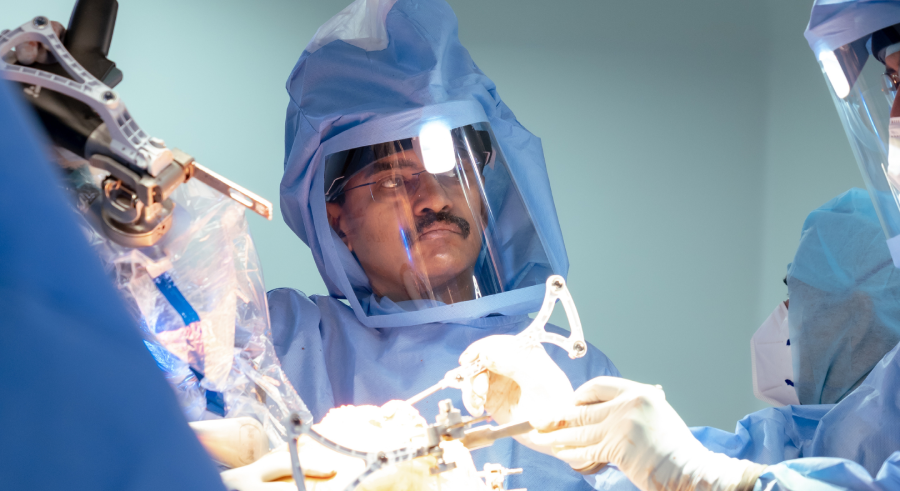
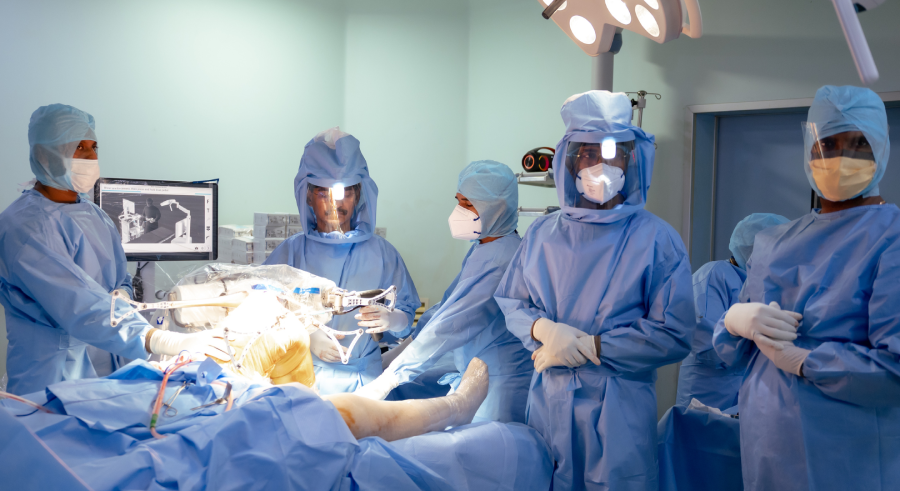
Patients should understand how their operation will be planned and performed. If robotic-assisted surgery is being considered, ask:
“What advantage would robotic assistance provide in my particular case?”
Robotic systems can support surgical planning, bone preparation and implant positioning. However, the technology works under the surgeon's direction. The surgeon's assessment and decision-making remain central to the procedure.
The important question is not whether robotic technology is available, but whether it is appropriate for the patient's specific knee.
4. How Experienced Are You With This Procedure?
Patients should feel comfortable asking about their surgeon's experience. Rather than asking only about years of practice, ask about experience with the specific operation being recommended.
You can ask:
- How frequently do you perform knee replacement?
- How experienced are you with robotic knee replacement?
- How do you manage severe deformities?
- How do you plan surgery for a complicated knee?
These questions can help patients understand whether their surgeon regularly performs the procedure they are considering.
5. Which Implant Will You Recommend?
Patients may find numerous implant brands and designs while researching knee replacement surgery. However, choosing an implant is not simply about selecting the most popular name.
Ask your surgeon:
- Which implant are you recommending?
- Why is it appropriate for my knee?
- How will it be positioned?
- What factors affect its long-term performance?
The surgeon should explain the choice according to the patient's anatomy, condition and surgical requirements.
6. What Are the Risks in My Particular Case?
Every operation has potential risks, and patients deserve a clear explanation before consenting to surgery.
Ask about complications such as infection, blood clots, bleeding, stiffness, nerve or blood vessel injury and implant-related problems.
One particularly useful question is:
“Are there any risks that are more relevant to me?”
Previous surgery, existing medical conditions, medications and other individual factors may influence surgical planning.
Understanding these risks does not mean expecting complications. It means knowing what to watch for and how they are managed.
7. What Will My Recovery Actually Look Like?
Recovery is one of the most common concerns before knee replacement surgery.
Instead of asking only when you will be “fully recovered,” discuss specific milestones with your surgeon.
Ask:
- When will I start walking?
- Will I need a walker or cane?
- When will physiotherapy begin?
- When can I return to work?
- When can I drive?
- When can I resume my usual activities?
Recovery differs between patients. Age, general health, muscle strength, the condition of the other knee and rehabilitation can all influence progress.
8. What Should I Do Before Surgery?
Preparation can make the early recovery period easier.
Ask whether you should work on strengthening exercises, change any medications, complete medical tests or make specific arrangements at home.
It is also useful to know what support you may need after discharge and how follow-up appointments will be scheduled.
9. What If I Wait or Choose Not to Have Surgery?
This is an important question that patients sometimes forget.
Ask what may happen if surgery is postponed and whether another treatment option remains reasonable.
For some patients, continuing conservative treatment may be appropriate. For others, increasing symptoms or joint damage may make further delay less useful. Your surgeon can explain what applies to your situation.
10. What Can I Realistically Expect After Surgery?
One of the most valuable questions to ask an orthopedic surgeon is:
“What can this surgery change, and what may it not change?”
Discuss expected changes in pain, knee movement, alignment and function. Also ask what rehabilitation will be required and whether other joint or health problems could affect your recovery.
Frequently Asked Questions
Should I Get a Second Opinion Before Knee Replacement?
A second opinion can be useful if you are uncertain about the diagnosis, timing or recommended procedure.
Should I Ask About Robotic Knee Replacement?
Yes. Ask whether it is suitable for your knee and what role it would play in your surgery.
What Should I Bring to My Consultation?
Bring previous scans, medical reports, your medication list and written questions.
Conclusion
A good surgical consultation should leave patients informed, not confused. Before knee replacement surgery, ask about the need for surgery, available options, surgical technique, implant, risks, preparation and recovery.
For patients considering treatment, a consultation with Dr. S. Arumugam can help them understand their individual knee condition and the treatment approach recommended for them. The goal is to make an informed decision based on clear medical advice and realistic expectations.